

"Thank you to the McFarland community for this award. We are honored and humbled. This award validates all the hard work our team puts into being truly compassionate to our patients. We have a mission to give great experiences and I think this award is a testament to that."
- Dr. Kevin DeGroot

A dentist may evaluate therapeutic botulinum toxin as one possible option for adults with persistent jaw-muscle symptoms, particularly when conservative care has not provided sufficient relief. A thorough exam is important because treating muscle activity without understanding the source of discomfort can miss a condition that needs different care.
- Frequent jaw clenching or teeth grinding (bruxism)
- Jaw-muscle soreness, tightness, or fatigue
- Tension-type headaches that appear related to jaw-muscle activity
- Facial muscle discomfort associated with clenching
- Tooth wear, cracked teeth, or restorations affected by grinding
- TMD-related muscle symptoms as part of a dentist-directed care plan

Dr. Brittany Boomgarden begins by discussing your symptoms, health history, medications, and goals. The examination may include your teeth, bite, jaw movement, jaw muscles, and signs of clenching or grinding. This matters because a nightguard, restorative care, habit changes, physical therapy, medical evaluation, or another approach may be more appropriate than injections.
If therapeutic botulinum toxin is a reasonable option, Dr. Brittany will discuss expected benefits, limitations, alternatives, potential risks, cost, and follow-up. Botulinum toxin use for TMD symptoms and bruxism is generally considered off-label in the United States, meaning the FDA has not approved it specifically for those uses. An off-label use may be clinically considered by a licensed clinician when appropriate for an individual patient.
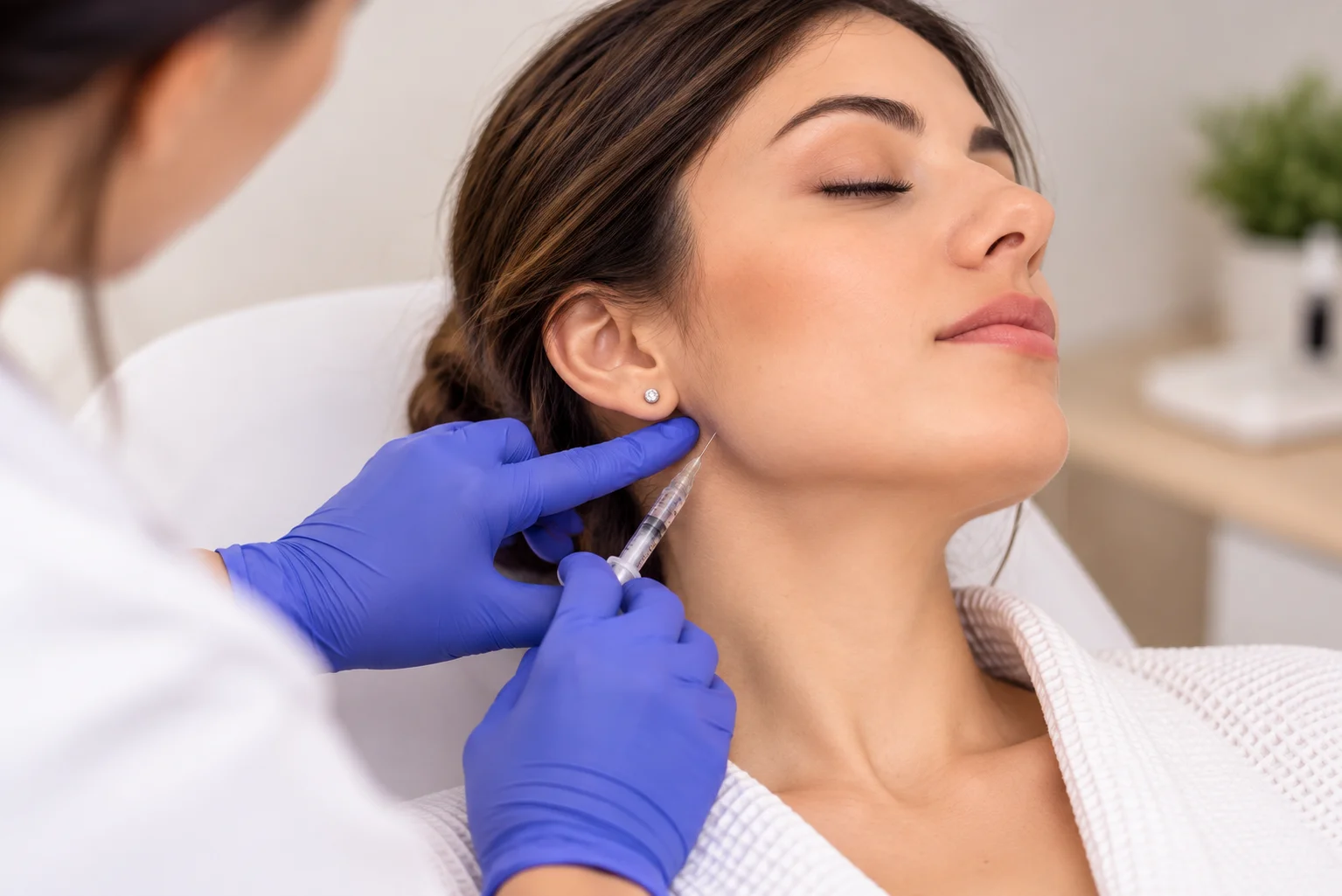
When treatment is chosen, the medication is placed in selected muscles based on your clinical findings. Results and duration vary by person. Follow-up allows the dental team to assess your response, oral health, and whether other parts of your care plan need adjustment.
Some patients may experience reduced jaw-muscle tightness or less clenching-related discomfort after treatment. However, outcomes vary, and no result can be guaranteed. Therapeutic botulinum toxin does not correct every cause of jaw pain, protect teeth by itself, or replace a properly fitted nightguard when one is indicated.
Side effects can occur and may include injection-site discomfort, bruising, headache, temporary weakness in nearby muscles, or changes in chewing. Rare but serious effects have been reported with botulinum toxin products. Tell your dentist about all medical conditions, medications, pregnancy or breastfeeding status, and any prior reaction to botulinum toxin. Seek prompt medical attention for trouble swallowing, speaking, or breathing after treatment.
Jaw-muscle treatment works best when it is considered within a complete dental plan. Depending on your needs, Lakeview Modern Dentistry may recommend monitoring tooth wear, repairing damaged teeth, evaluating your bite, discussing a protective appliance, or coordinating with another healthcare provider. This comprehensive approach matters because lasting comfort often requires more than one tool.
If severe pain, jaw locking, swelling, fever, facial trauma, or a sudden change in your bite is present, contact a dental or medical professional promptly. Those symptoms may need urgent evaluation rather than elective therapeutic treatment.

No. In the United States, botulinum toxin products are not FDA-approved specifically for TMD/TMJ disorders or bruxism. A licensed clinician may consider an off-label use after evaluating whether it is appropriate for an individual patient.
It may reduce activity in selected jaw muscles for some patients, but it does not address every reason people clench or grind. Your dentist may recommend additional measures, such as a nightguard or treatment for dental damage, because protection and symptom relief are different goals.
Response and duration vary by person, treatment area, and clinical plan. Dr. Brittany can explain what is realistic for your situation and schedule follow-up based on your response.
The purpose of this page's treatment approach is therapeutic management of jaw-muscle symptoms, not cosmetic wrinkle treatment. Any potential effects on nearby muscles, chewing, or facial appearance should be discussed during informed consent.
Suitability depends on your medical history, medications, pregnancy or breastfeeding status, allergies, and clinical findings. A consultation is necessary so your dentist can review safety considerations and alternatives.
For those visiting Lakeview Modern Dentistry from Stoughton:


